Automotive & mobility

B2B

From paper forms to AI-powered inspections in 6 weeks

Client

Ebbon Intelligence

Ebbon Intelligence

Model

Partnership

Partnership

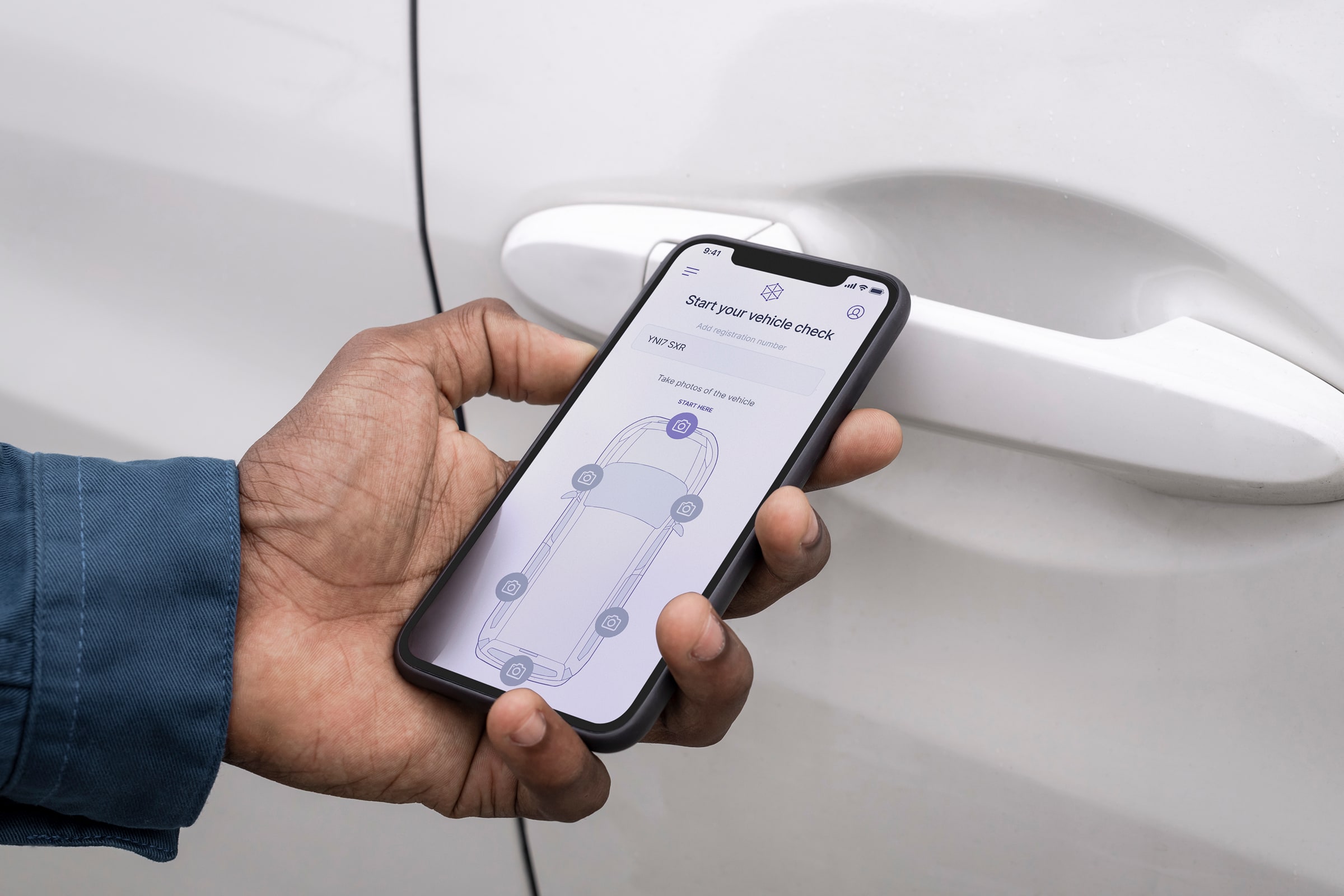
A hand holding an iPhone close to a white car door handle, with the DamageCheck app open showing the "Start your vehicle check" screen with a top-down vehicle diagram and camera icons marking six inspection positions.

Services

Product strategy

Product strategy

UX/UI design

UX/UI design

User research

User research

Rapid prototyping

Rapid prototyping

Proposition testing

Proposition testing

Info

Fleet operators lose millions annually due to disputed damage claims and inefficient inspection processes.

Ebbon Group saw an opportunity to transform this broken system through AI-powered technology, requiring rapid validation and deployment to capture first-mover advantage in a traditional industry resistant to change.

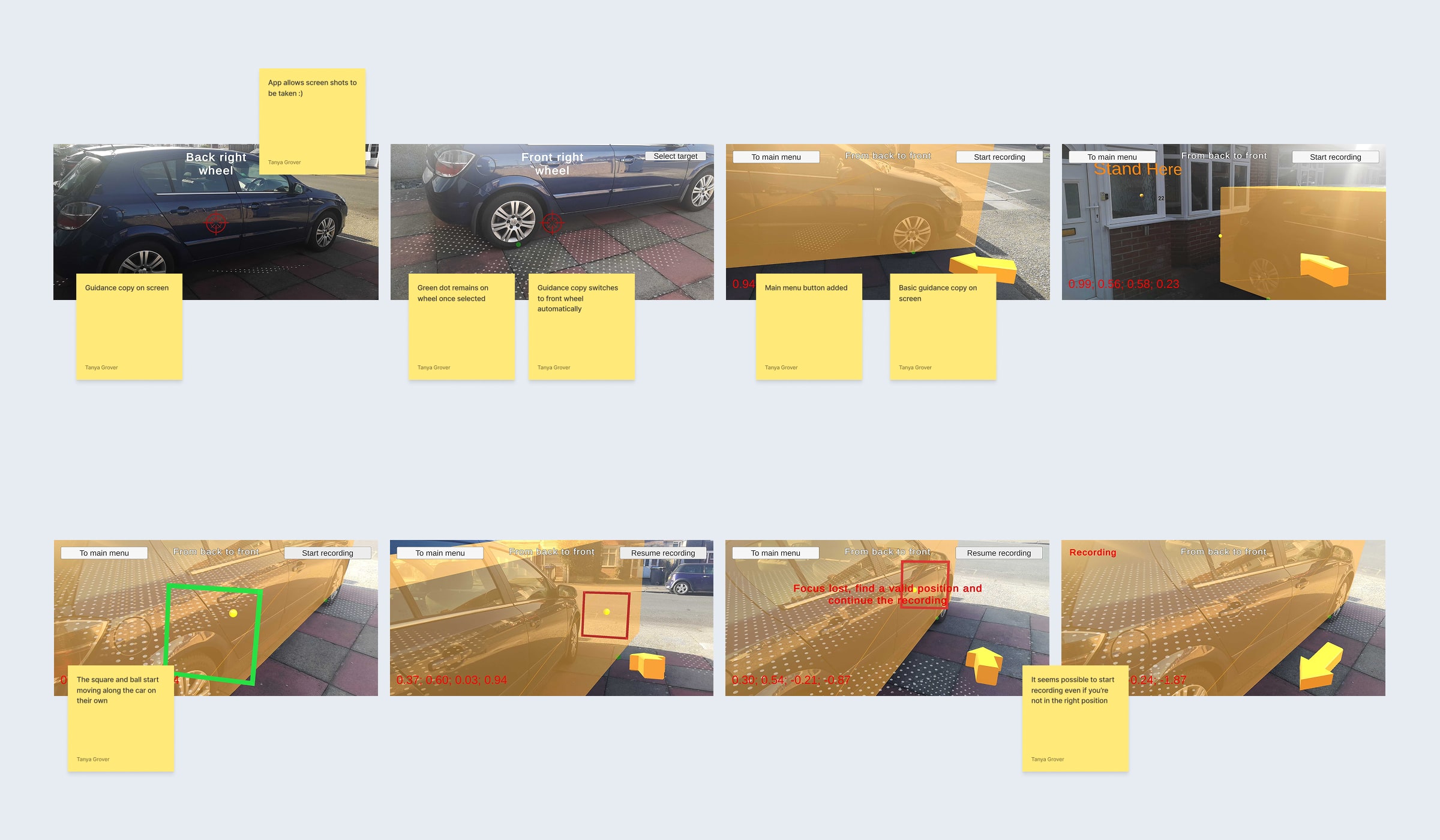
User testing session showing eight AR prototype screenshots of a vehicle scanning app annotated with sticky note observations, capturing feedback on wheel targeting, guidance copy, AR anchoring behaviour, and error states.
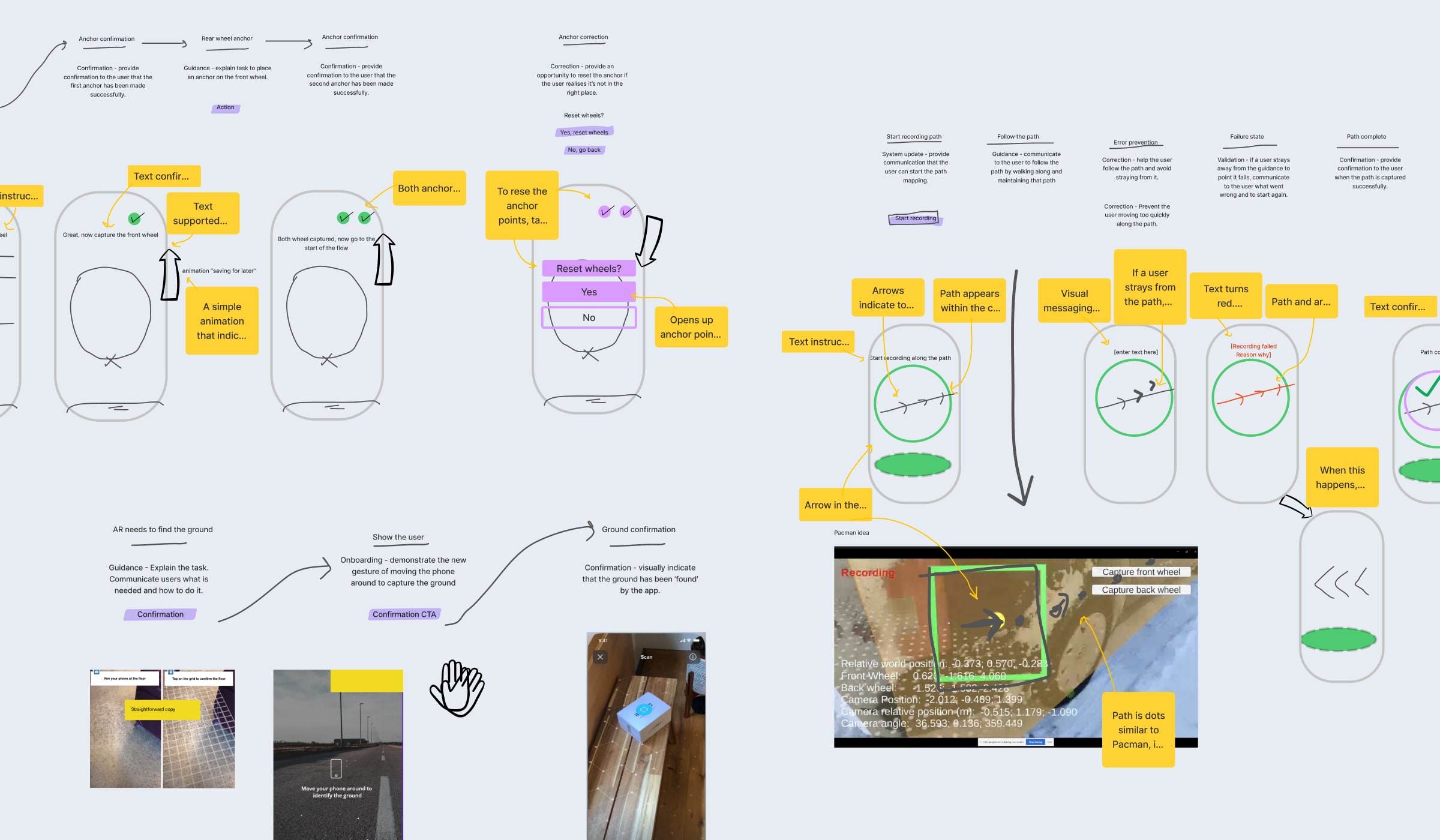
Design exploration board showing wireframe flows and annotated sketches for the AR vehicle scanning journey, covering ground detection, wheel anchor placement, path recording, error prevention states, and a Pac-Man-inspired path visualisation concept.
Design provocation on a purple background asking: "What if capturing vehicle damage was as simple as taking a panoramic photo?"
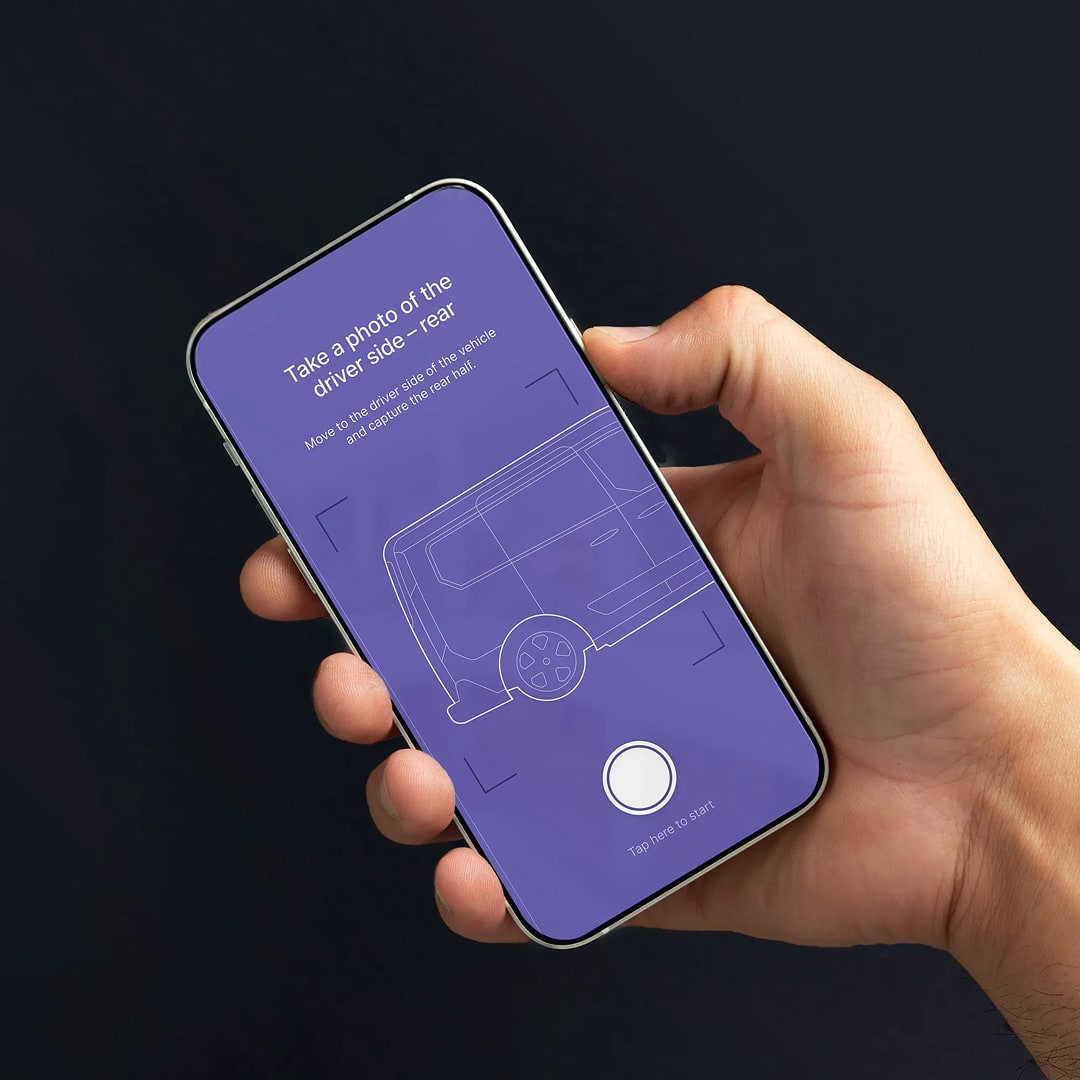
A hand holding an iPhone displaying the DamageCheck AR camera guidance screen, prompting the user to photograph the driver side rear of a vehicle, with a line-drawn vehicle diagram and a shutter button overlay.

Challenge

35% of vehicle returns result in a conflict, and fleet operators face average losses of £270 per disputed damage claim. Anything less than flawless accuracy in damage detection carries real cost.

Yet AI solutions require extensive testing and iteration. How do you validate a proposition that must be perfect before deployment without risking financial disputes?

Our analysis

Scenarios like this require creative testing to validate user workflows, adoption patterns, and accuracy requirements before committing to full technical development. In other words, fake it.

Mimicking an AI with clever prototypes would enable rapid validation of critical assumptions and market confidence in the solution's viability, before a single line of code is written.
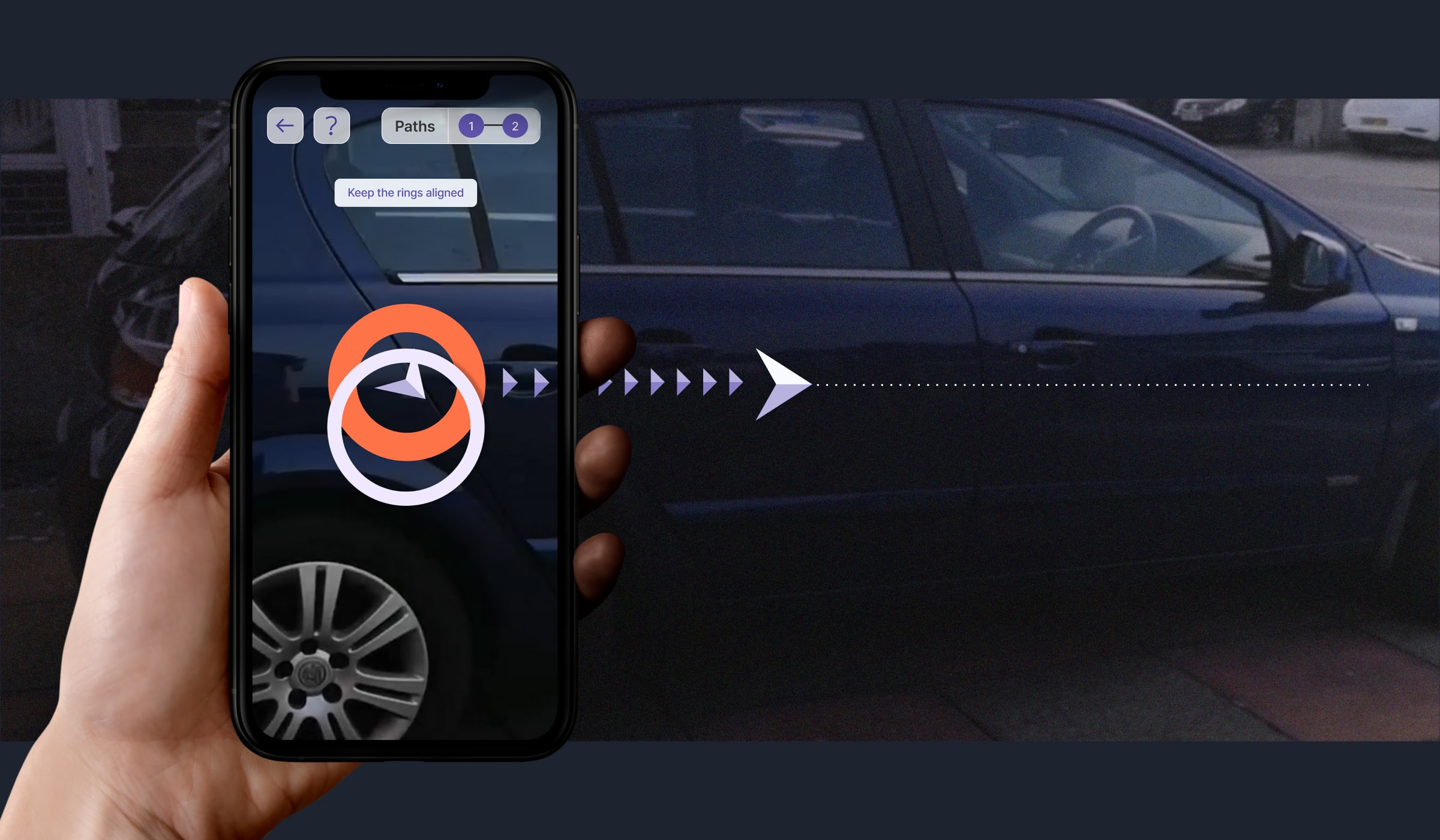
Composite image of a hand holding a phone showing the AR scanning interface with overlapping orange and white alignment rings and an arrow path guiding the user along the side of a dark blue car.
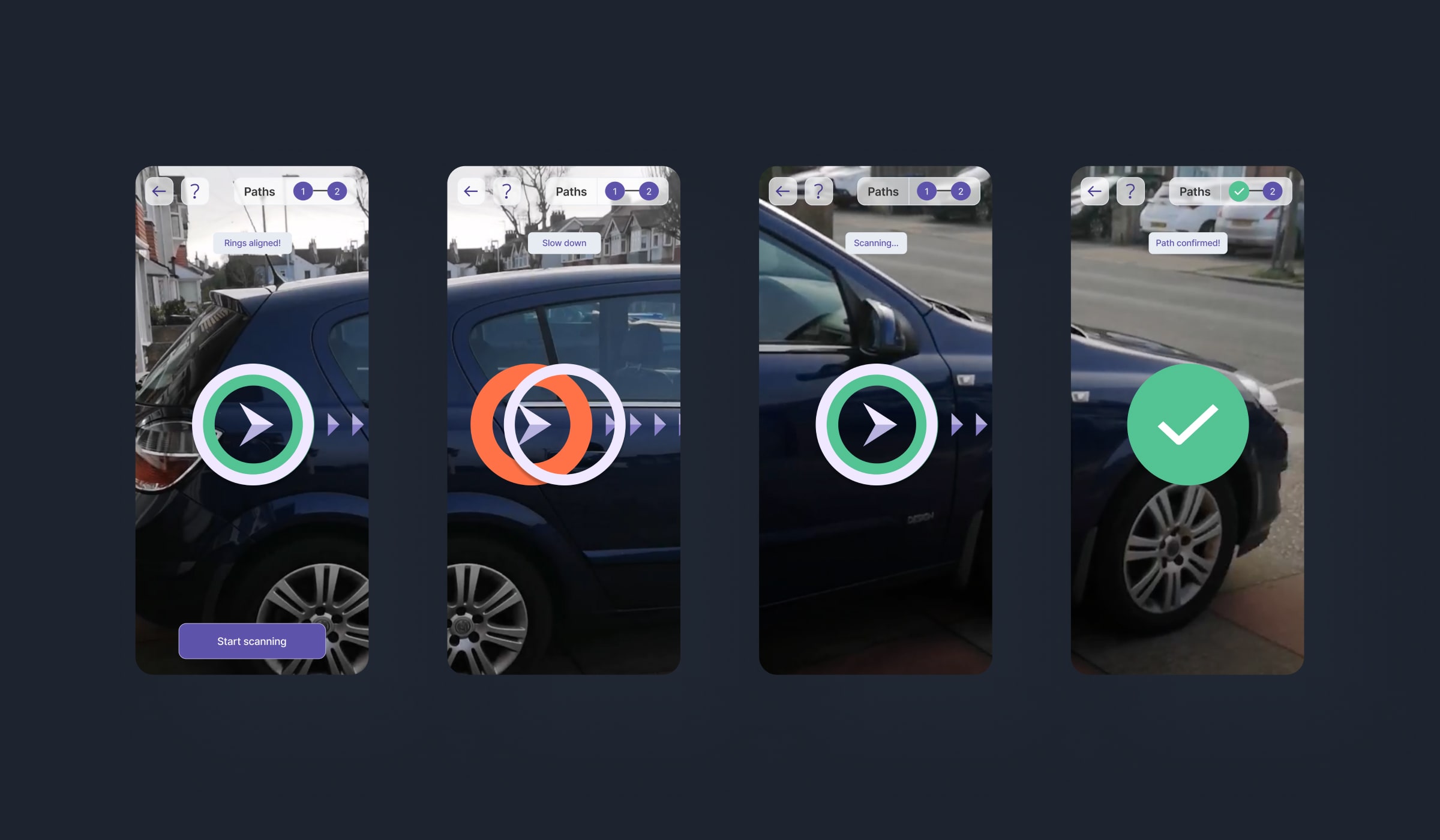
Four sequential mobile screens showing the AR path scanning flow: rings aligned with a "Start scanning" prompt, rings misaligned in orange with a "Slow down" warning, a scanning state, and a confirmation screen with a green tick and "Path confirmed."
Illustration of a woman with red hair holding a phone next to a white hatchback, with a green speech bubble above reading "Start here," set against a dark background.
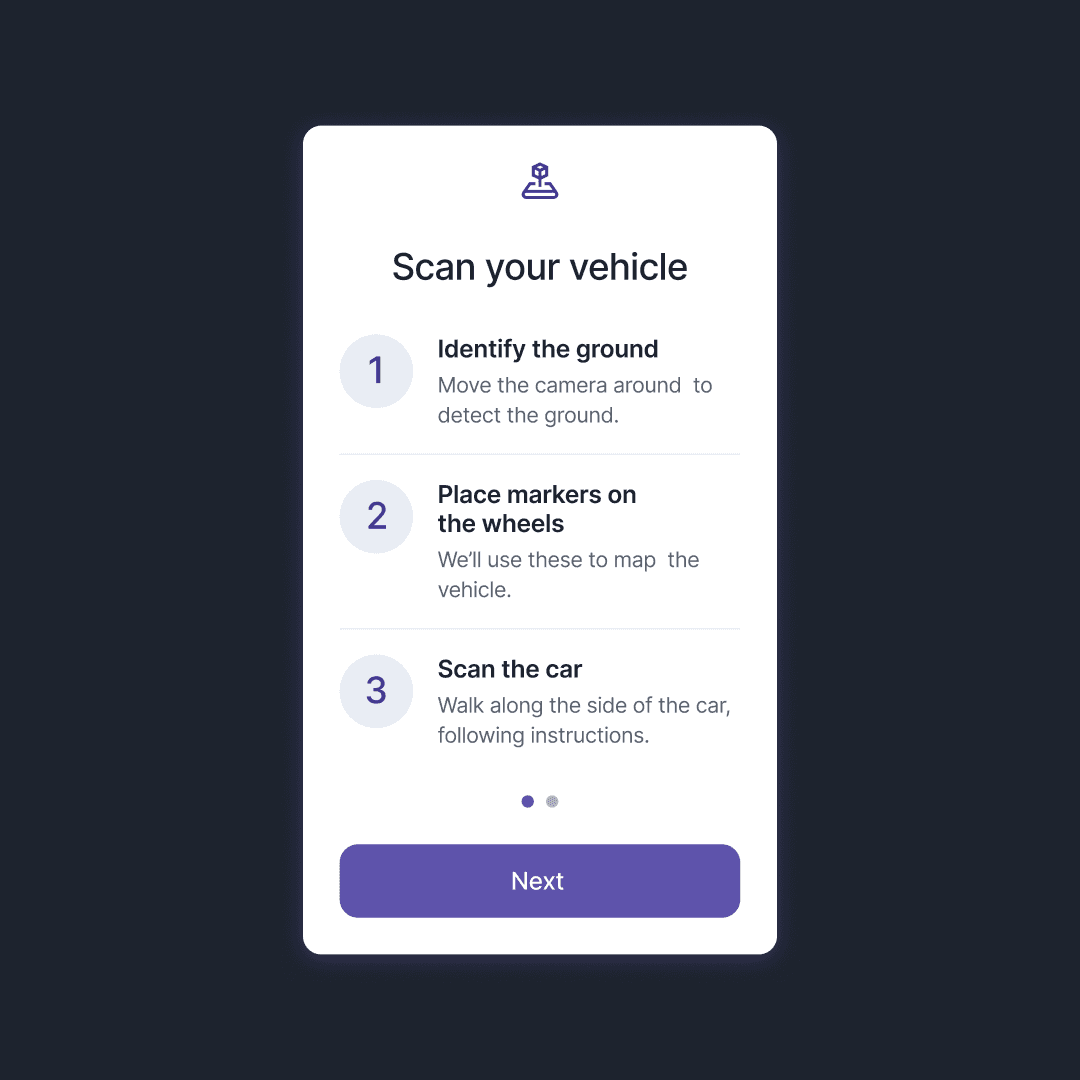
Onboarding instruction card titled "Scan your vehicle" listing three steps: identify the ground, place markers on the wheels, and scan the car, with a "Next" button.
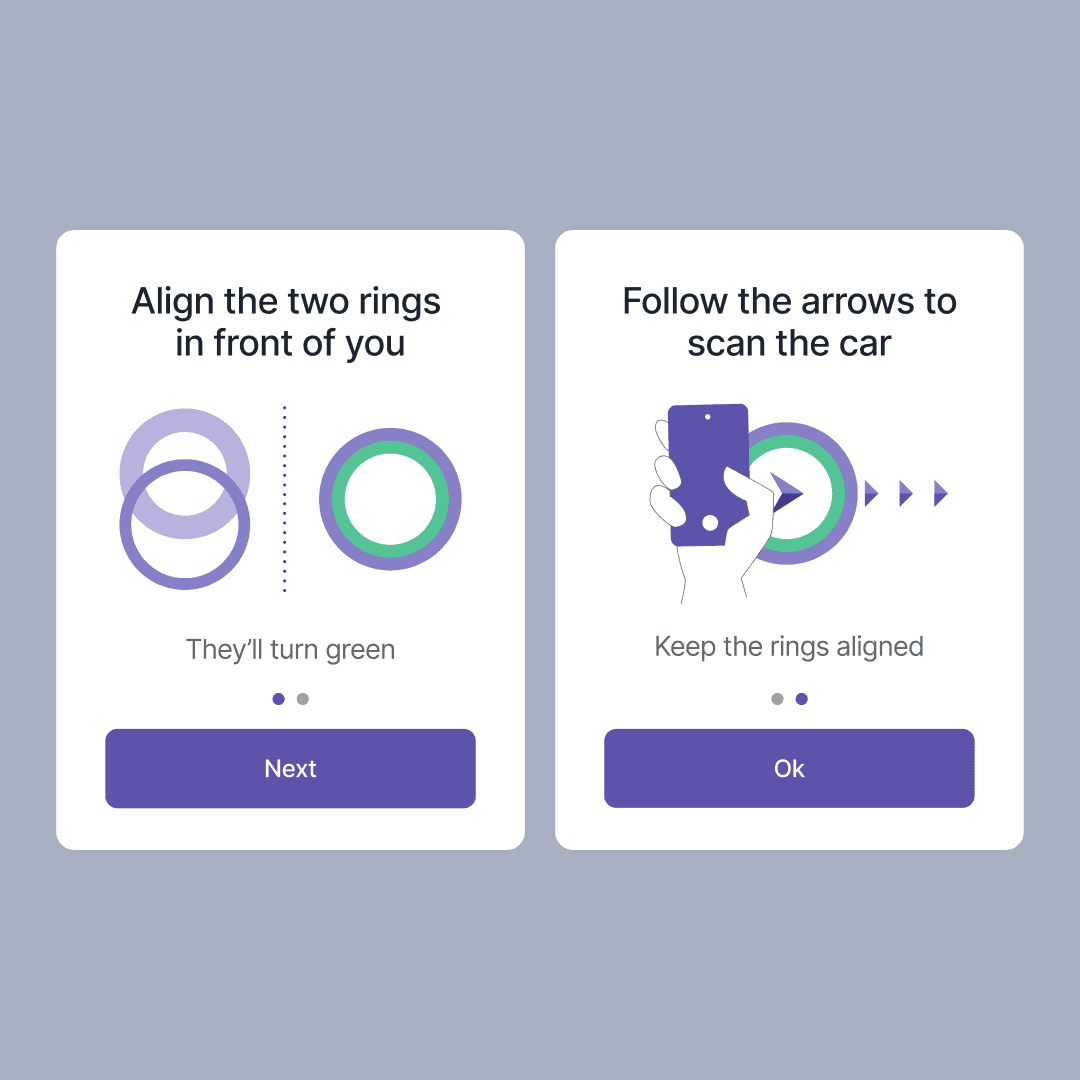
Two onboarding instruction cards side by side: the first explaining how to align two rings until they turn green, and the second showing how to follow arrows along the vehicle while keeping the rings aligned.
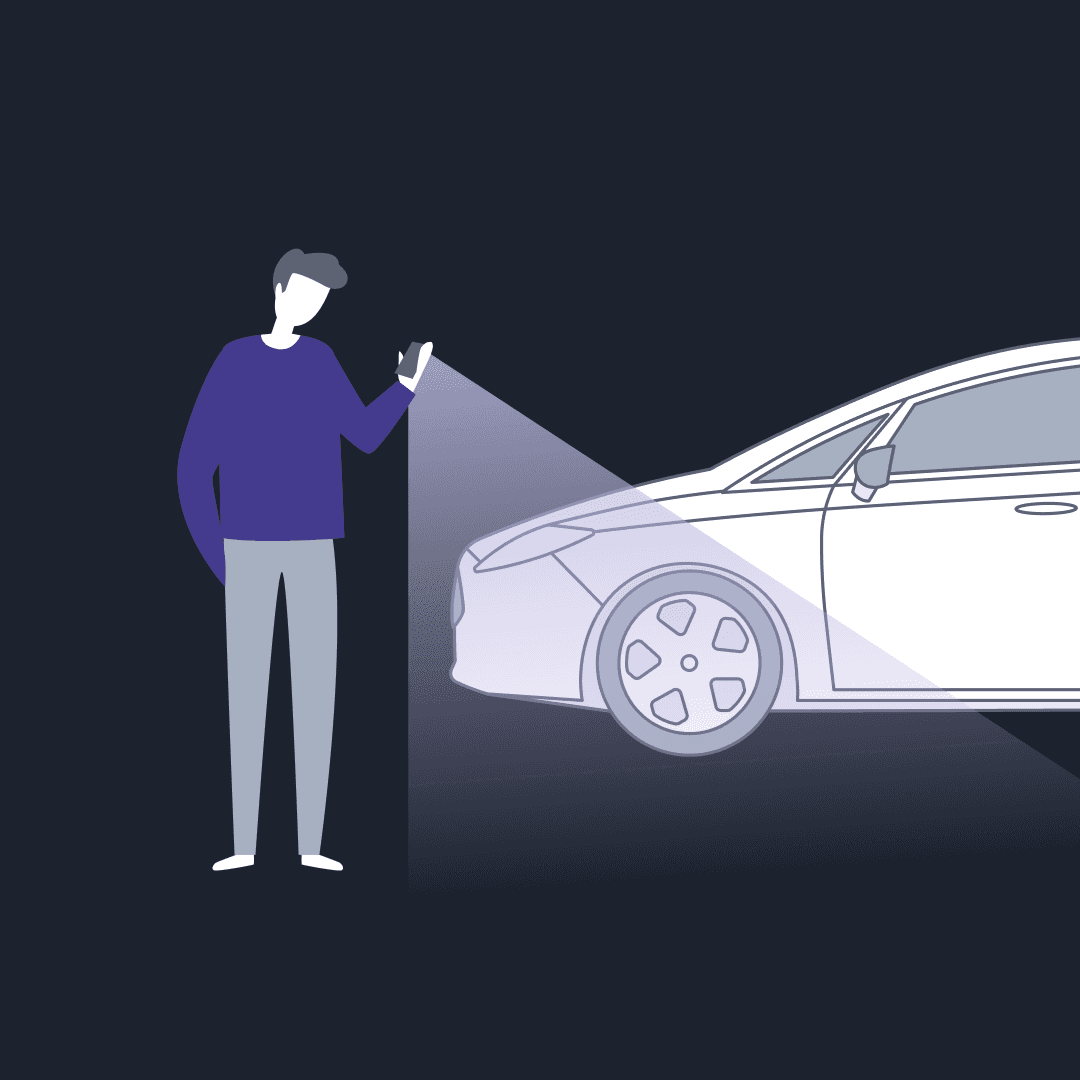
Illustration of a man in a navy jumper holding a phone up to scan a white car, with a beam of light from the camera projecting onto the vehicle's front quarter, set against a dark background.

What we did

01.

Market validation from multiple evidence sources

Combined expert interviews with competitor research and direct customer conversations with corporate fleet managers. We used different research methods to validate market demand more quickly while identifying the technical and adoption challenges that needed solving.

Market validation from multiple evidence sources

Combined expert interviews with competitor research and direct customer conversations with corporate fleet managers. We used different research methods to validate market demand more quickly while identifying the technical and adoption challenges that needed solving.

02.

Real-world testing for practical constraints

Hands-on trials with nine vehicles in low-light conditions to address fleet managers' biggest concern about photo quality after dark. Proved that standard mobile cameras could capture enough detail for damage detection while identifying practical instructions drivers would need to work safely.

Real-world testing for practical constraints

Hands-on trials with nine vehicles in low-light conditions to address fleet managers' biggest concern about photo quality after dark. Proved that standard mobile cameras could capture enough detail for damage detection while identifying practical instructions drivers would need to work safely.

03.

Customer Jobs-to-be-Done mapping

Built detailed profiles of corporate managers and drivers, mapping their specific jobs and pains. Drafted service blueprints showing user journeys, system touch points, and highlighted critical moments where the solution might succeed or fail.

Customer Jobs-to-be-Done mapping

Built detailed profiles of corporate managers and drivers, mapping their specific jobs and pains. Drafted service blueprints showing user journeys, system touch points, and highlighted critical moments where the solution might succeed or fail.

04.

Tangible concept development

Built complete DamageCheck brand and designed realistic mobile and desktop applications showing the full inspection process. Used video production tricks to create realistic demonstrations of the interface working with real vehicles to make the concept concrete for customer validation.

Tangible concept development

Built complete DamageCheck brand and designed realistic mobile and desktop applications showing the full inspection process. Used video production tricks to create realistic demonstrations of the interface working with real vehicles to make the concept concrete for customer validation.

05.

Evidence-based development strategy

Documented all evidence and findings in a research repository, ranking next development steps by evidence quality. Used rapid iteration methods during customer interviews to maximise learning from each conversation.

Evidence-based development strategy

Documented all evidence and findings in a research repository, ranking next development steps by evidence quality. Used rapid iteration methods during customer interviews to maximise learning from each conversation.

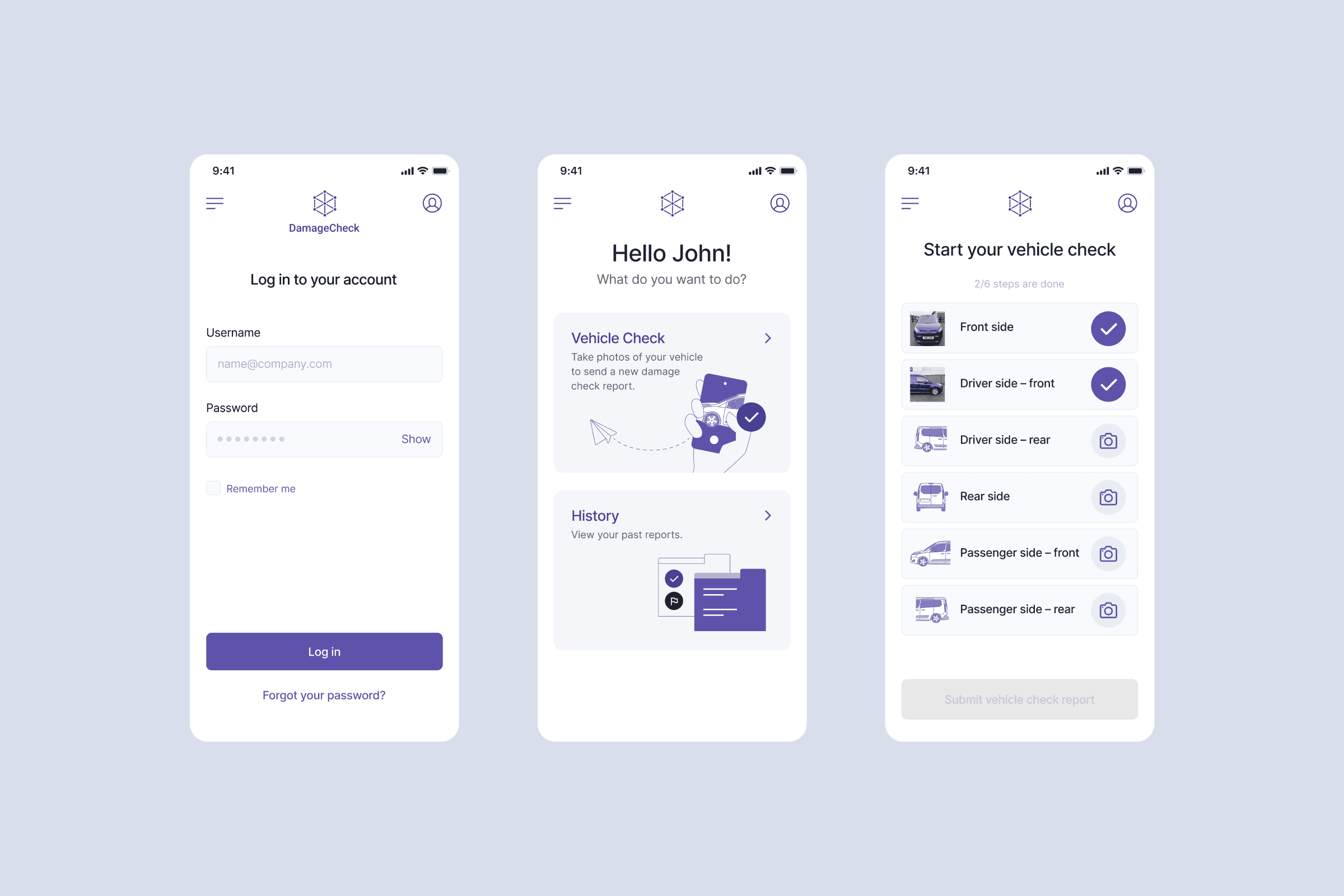
Three DamageCheck app screens showing the login screen, a home screen with vehicle check and history options, and the vehicle check flow listing six photo steps with two already completed.
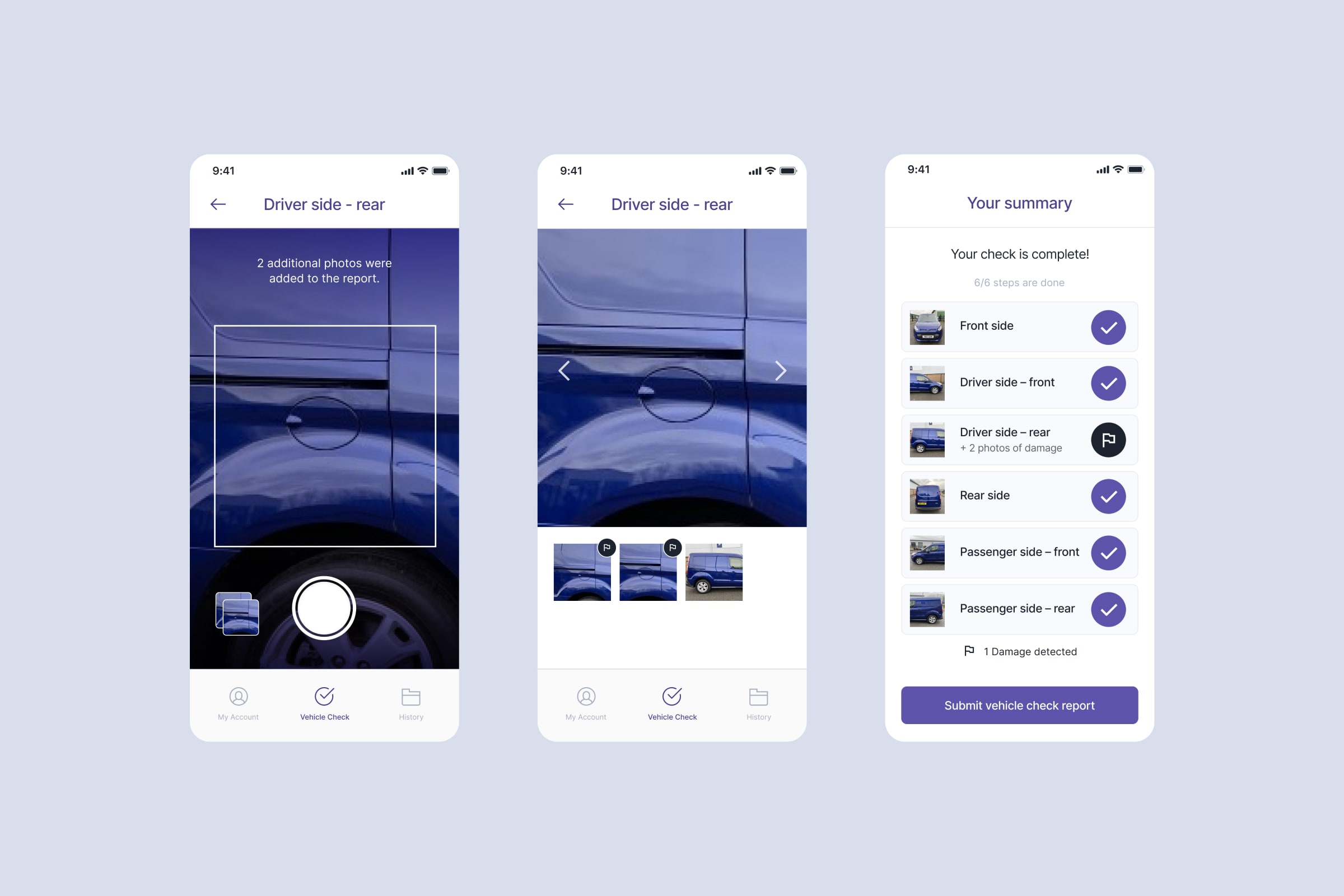
Three DamageCheck app screens showing an active camera capture view for the driver side rear, a photo review screen with additional damage images in a carousel, and the completed summary screen showing all six sides captured with one damage flag and a submit button.
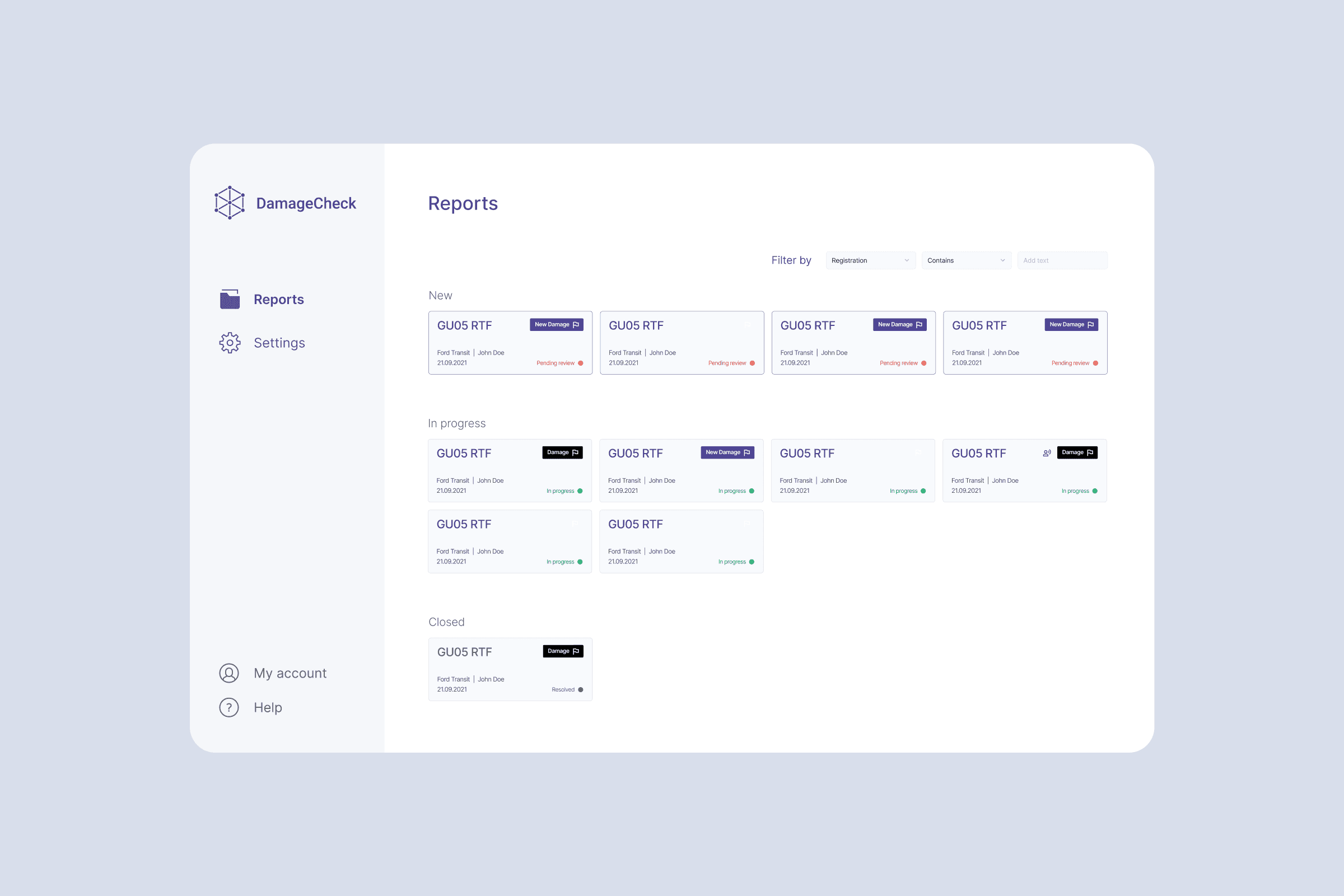
DamageCheck fleet manager dashboard showing the Reports screen with vehicle inspection cards grouped into New, In Progress, and Closed sections, each card showing registration, vehicle type, driver name, date, and status indicators.
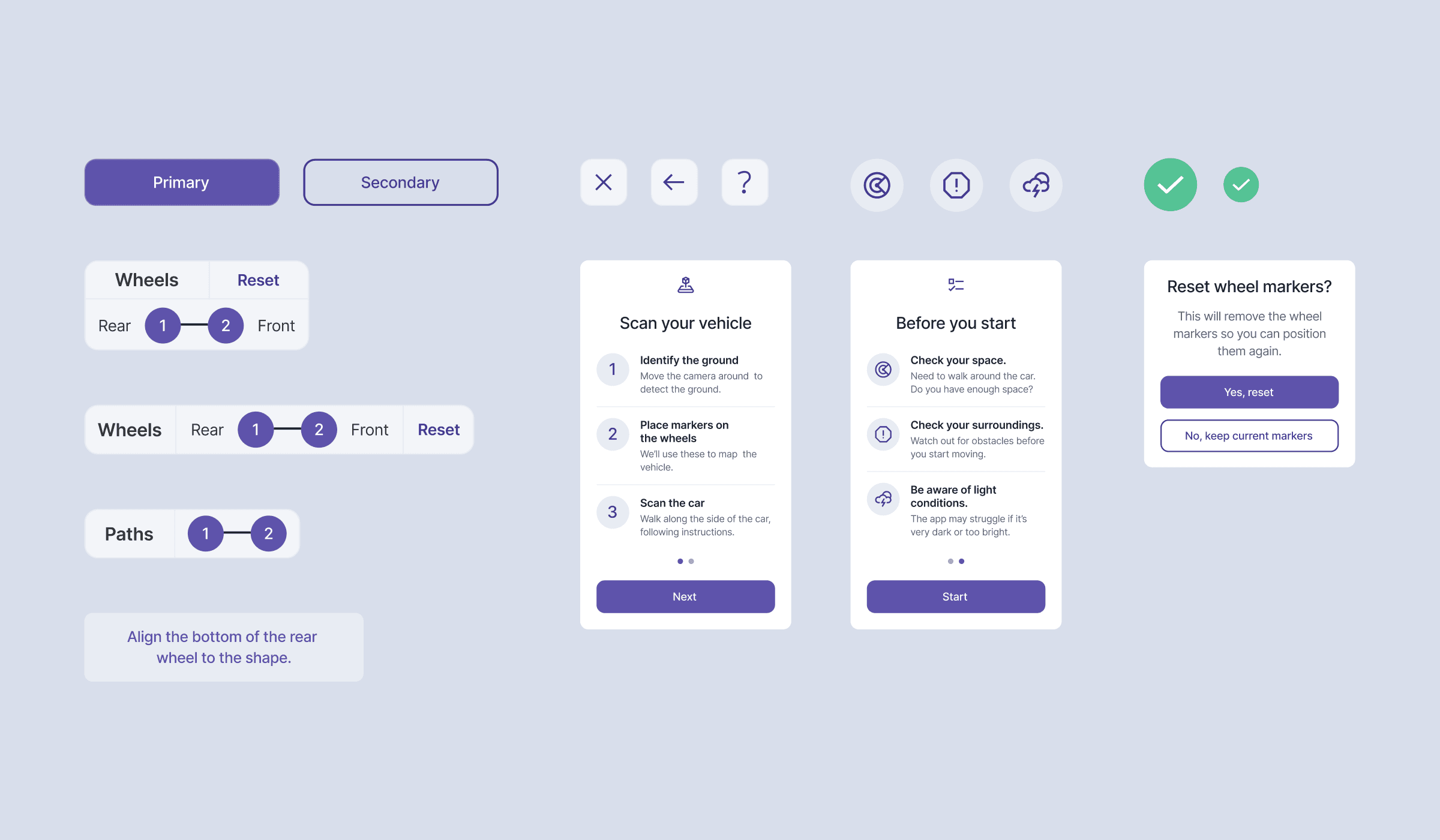
DamageCheck design system components showing primary and secondary button styles, navigation icons, step indicator patterns for wheels and paths, onboarding instruction cards, a safety checklist, and a reset wheel markers confirmation dialog.
AR scanning design system elements showing the full set of visual primitives: dot grid pattern, sphere and square shapes, forward and backward arrow sequences, wheel alignment guides, a directional arrow, and the ring states progressing from white to orange to green to confirmed.
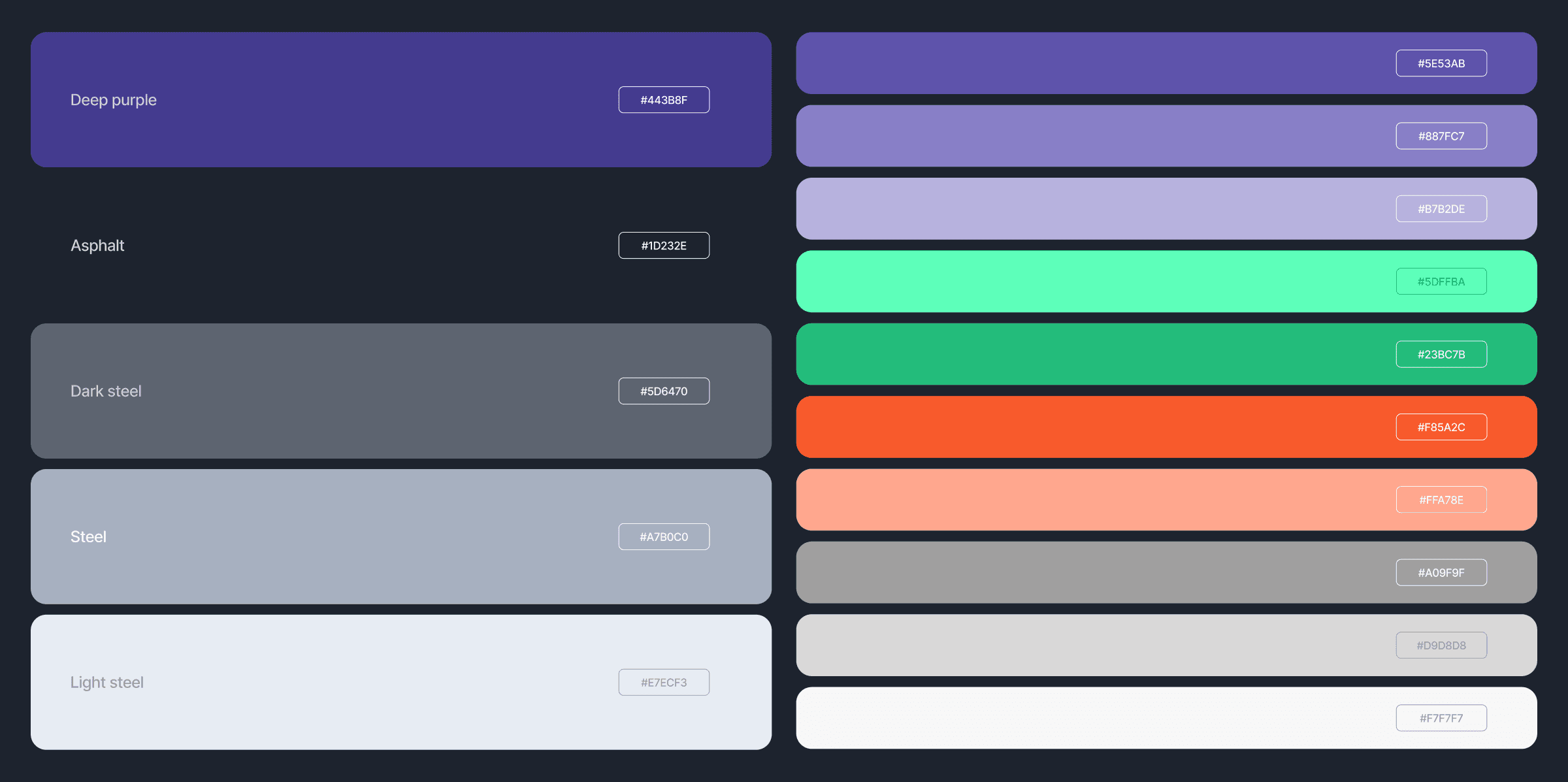
DamageCheck colour palette documentation on a dark background showing named swatches for deep purple, asphalt, dark steel, steel, and light steel on the left, alongside purple tints, two greens, two oranges, two greys, and white on the right, each labelled with a hex code.

Project impact

Validated market demand

Established direct pathway to purchase with target customers and commitment from all participants for follow-up demonstrations.

Validated market demand

Established direct pathway to purchase with target customers and commitment from all participants for follow-up demonstrations.

De-risked product development

Identified critical technical barriers to address before market entry, preventing costly development of unviable solutions.

De-risked product development

Identified critical technical barriers to address before market entry, preventing costly development of unviable solutions.

Blueprint for market entry

Realistic prototypes and a rollout strategy created a clear roadmap for which assumptions to develop and test now, next and later.

Blueprint for market entry

Realistic prototypes and a rollout strategy created a clear roadmap for which assumptions to develop and test now, next and later.

Test products that must work perfectly from day one

Customers expect perfection from day one, yet perfection requires testing. This validation paradox leads to wasted development or missed opportunities.

Our evidence-based methodology helps you test critical assumptions early using realistic prototypes and systematic customer validation, proving viability before full investment.

Ready to validate your next product idea before building it?