Banking & fintech

B2C

Unifying 20 payment silos to help Kenya's third-largest bank compete in a 97% digital market

Client

NCBA Bank

NCBA Bank

Model

Partnership

Partnership

NCBA mobile app payment confirmation screen resting on an orange velvet ottoman, showing "Money successfully sent" with share and done actions.

Services

Product strategy

Product strategy

UX/UI design

UX/UI design

Info

Kenya's third-largest bank faced an existential challenge: transform digitally whilst 70% of IT budgets remained trapped in legacy systems. With more than 80% of Kenya adults adopting mobile money platforms, NCBA's complex, fragmented infrastructure across 20+ payment methods threatened its competitive position.

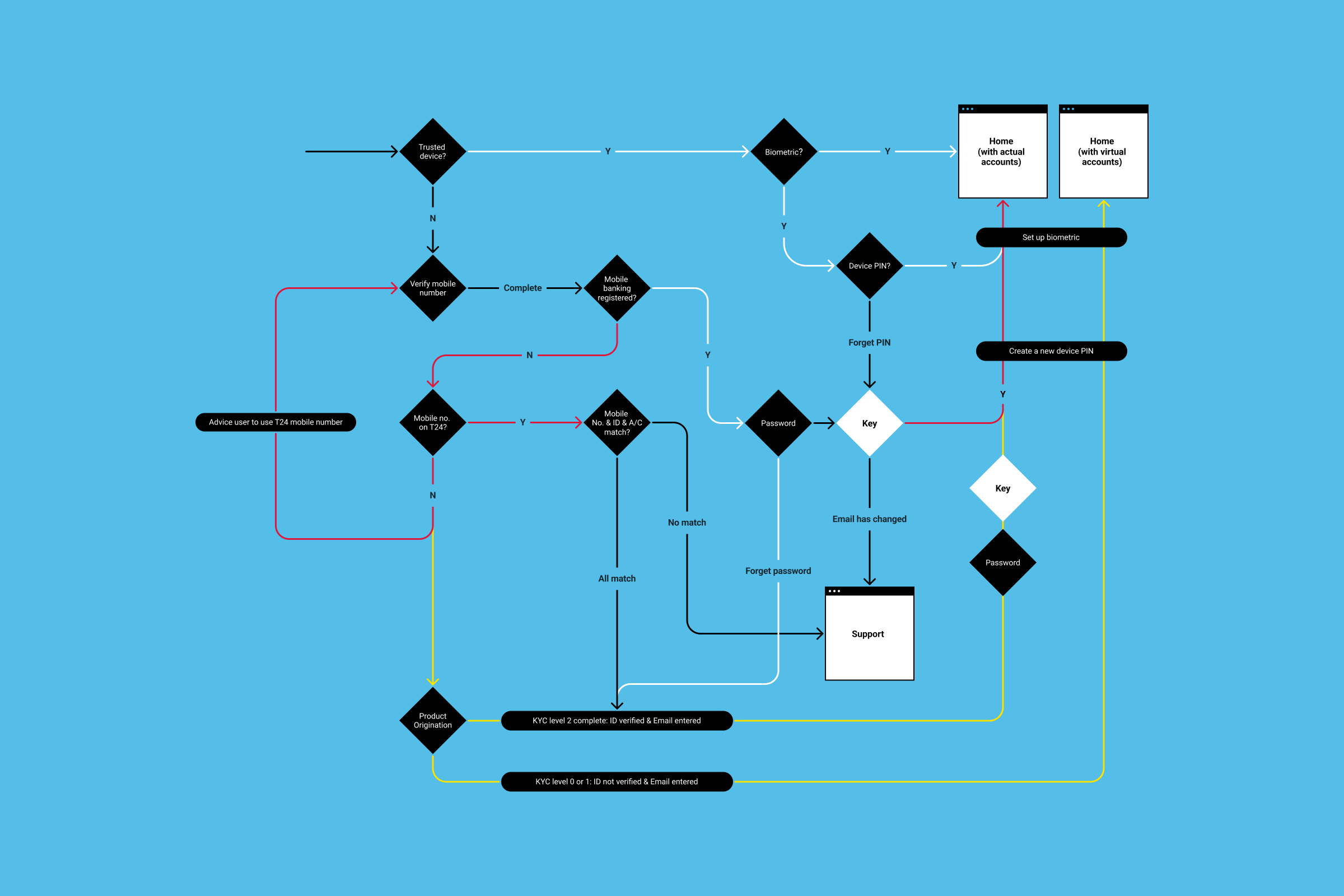
Authentication flow diagram mapping the sign-in logic for NCBA's mobile banking app, including trusted device checks, biometric login, PIN and password recovery paths, and KYC verification states.
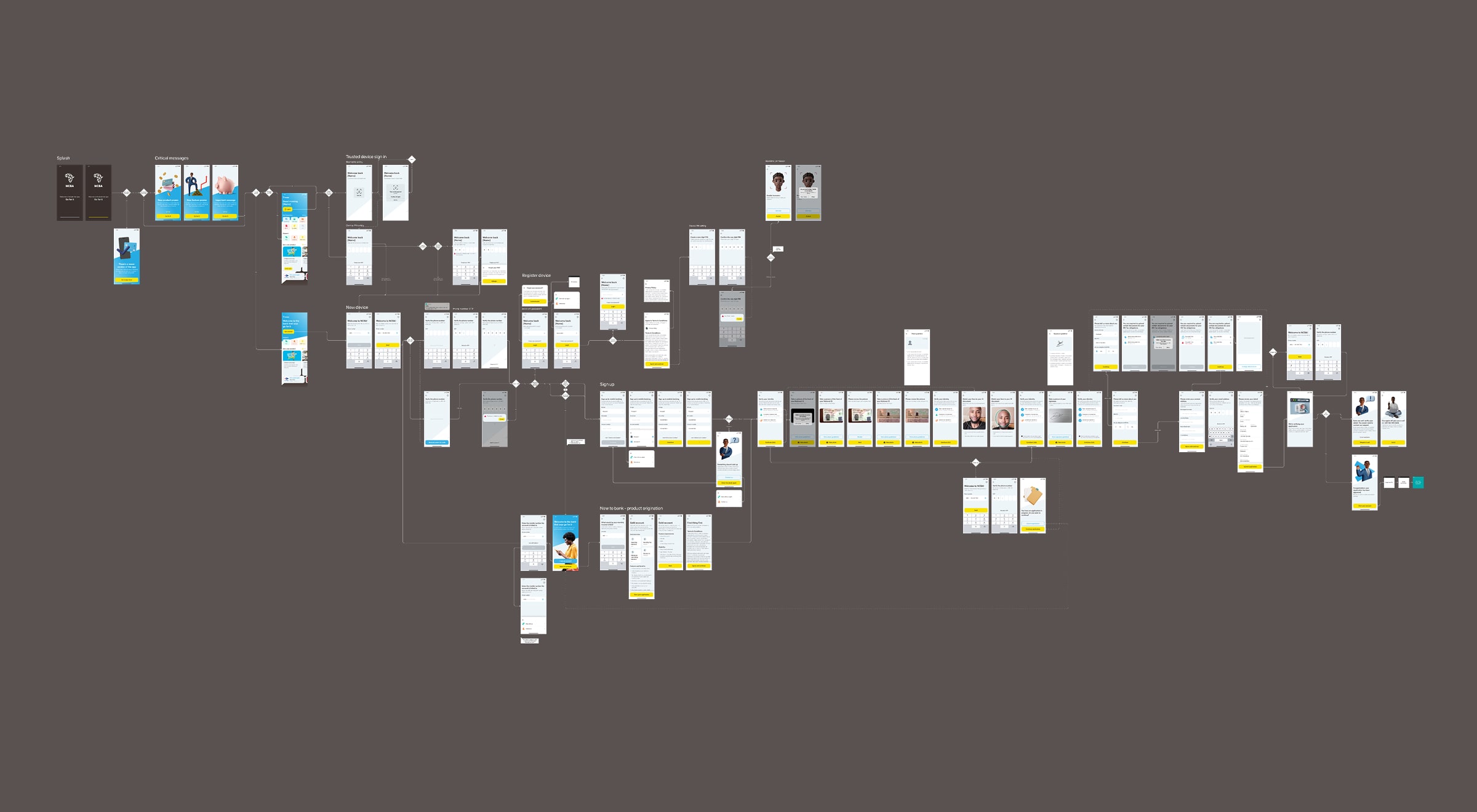
Full user flow overview in Figma showing all screens and decision points across the NCBA mobile banking app, from splash and onboarding through sign-up, KYC, and product origination.

Challenge

Kenya's fragmented payment landscape meant NCBA needed to integrate 20+ different methods—from M-Pesa to SWIFT—without a full rebuild. But with mobile money 80% cheaper than banking and M-Pesa controlling 66% of payments, NCBA couldn't just connect systems. They needed unified UX architecture that made payments seamless regardless of method.

Our analysis

Success meant one interface handling significant complexity. The real challenge wasn't the number of payment methods but the prioritisation of features. Users needed the right option at the right moment, not every option. Mapping usage patterns revealed how to hide complexity without limiting functionality. An intelligent, context-adaptive interface transformed NCBA into a unified financial platform.

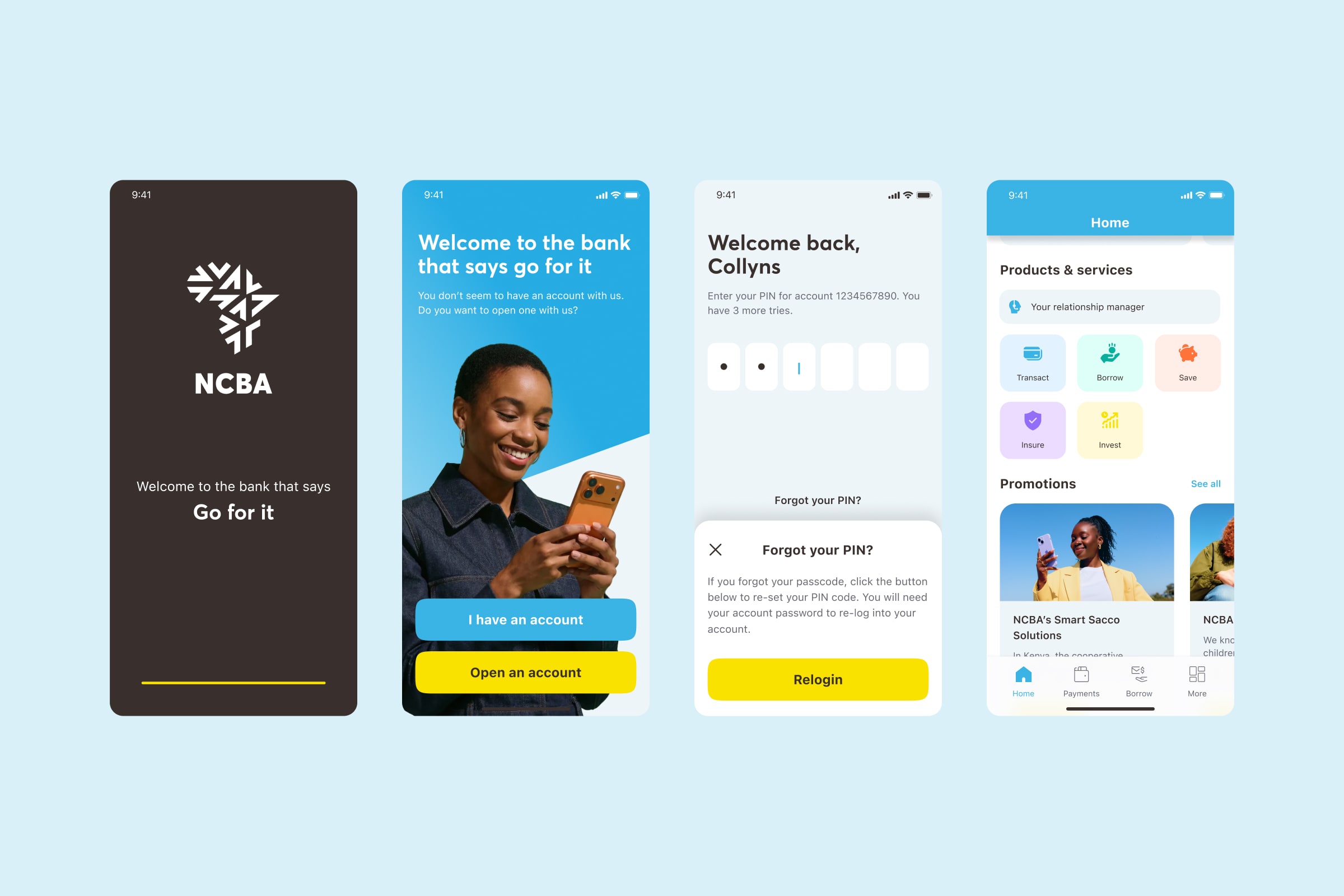
Four mobile screens showing the NCBA app's core sign-in journey: splash screen, new user welcome, PIN entry with forgot PIN modal, and the home screen with products and services.
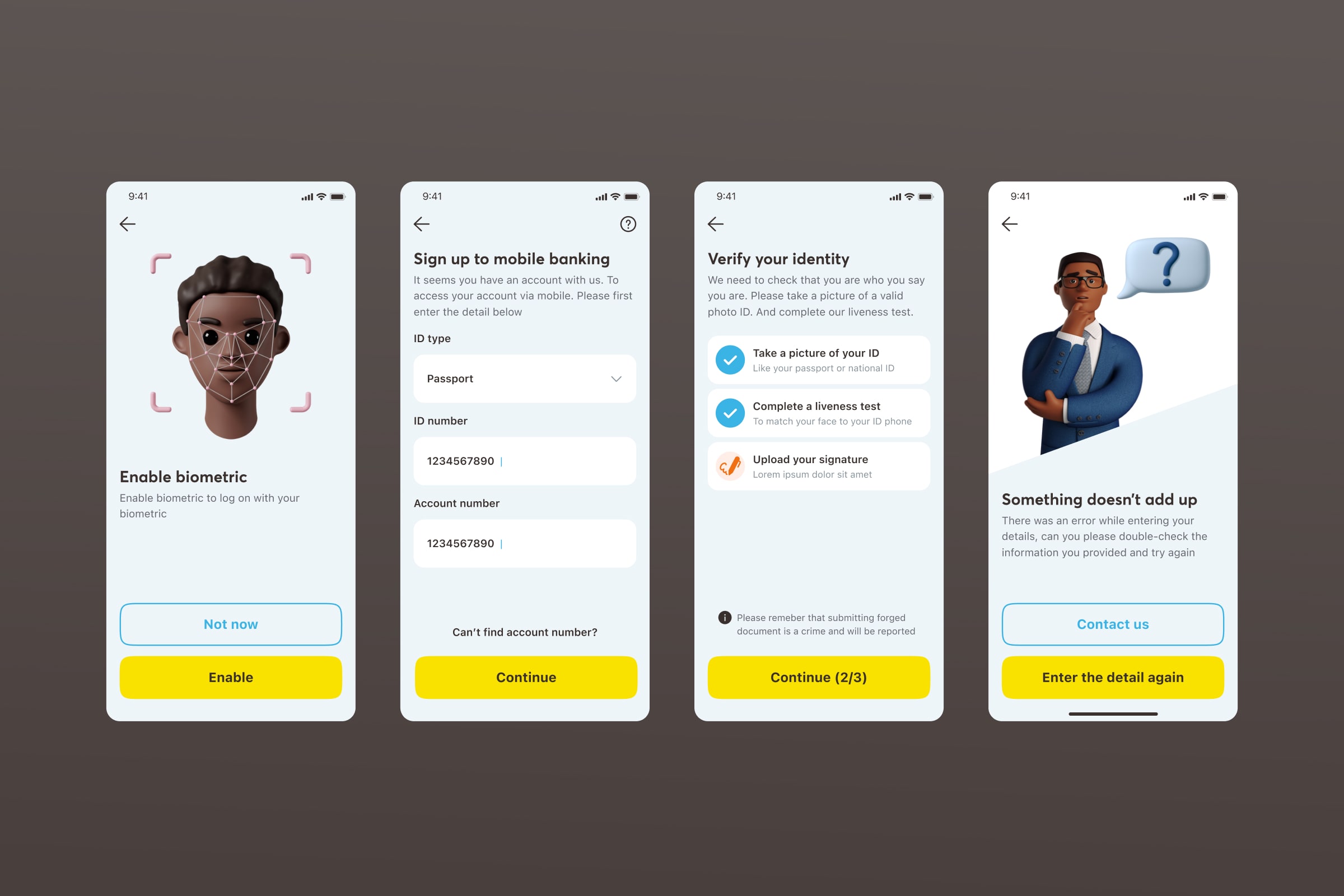
Four mobile screens from the NCBA onboarding flow: biometric setup, mobile banking sign-up form, identity verification checklist, and an error state screen.
Promotional card component showing two young women using smartphones, with the title "NCBA and University" and a "Read more" button styled in NCBA's brand yellow.
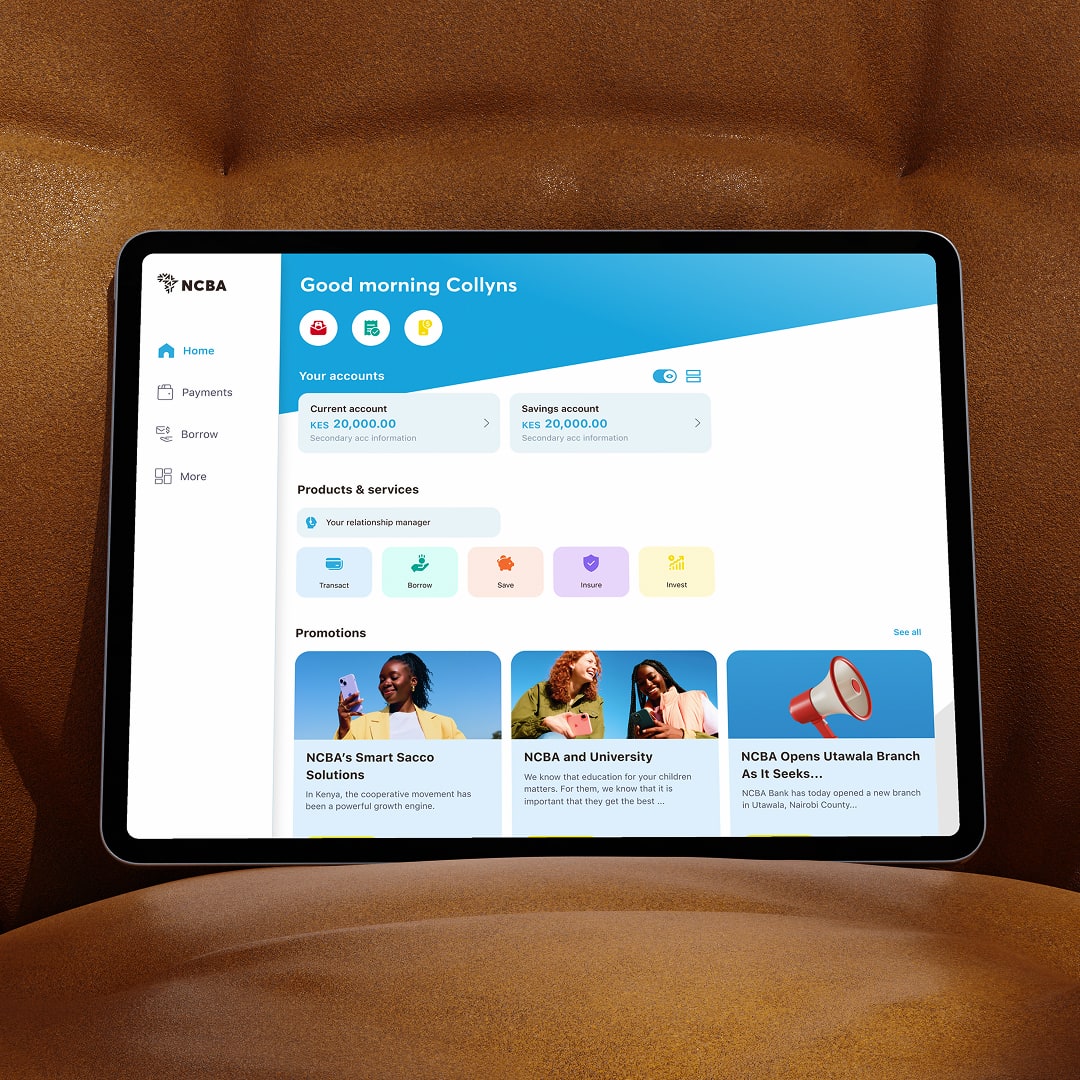
NCBA mobile banking dashboard displayed on an iPad, showing a personalised greeting, account balances, product categories, and promotional content cards.
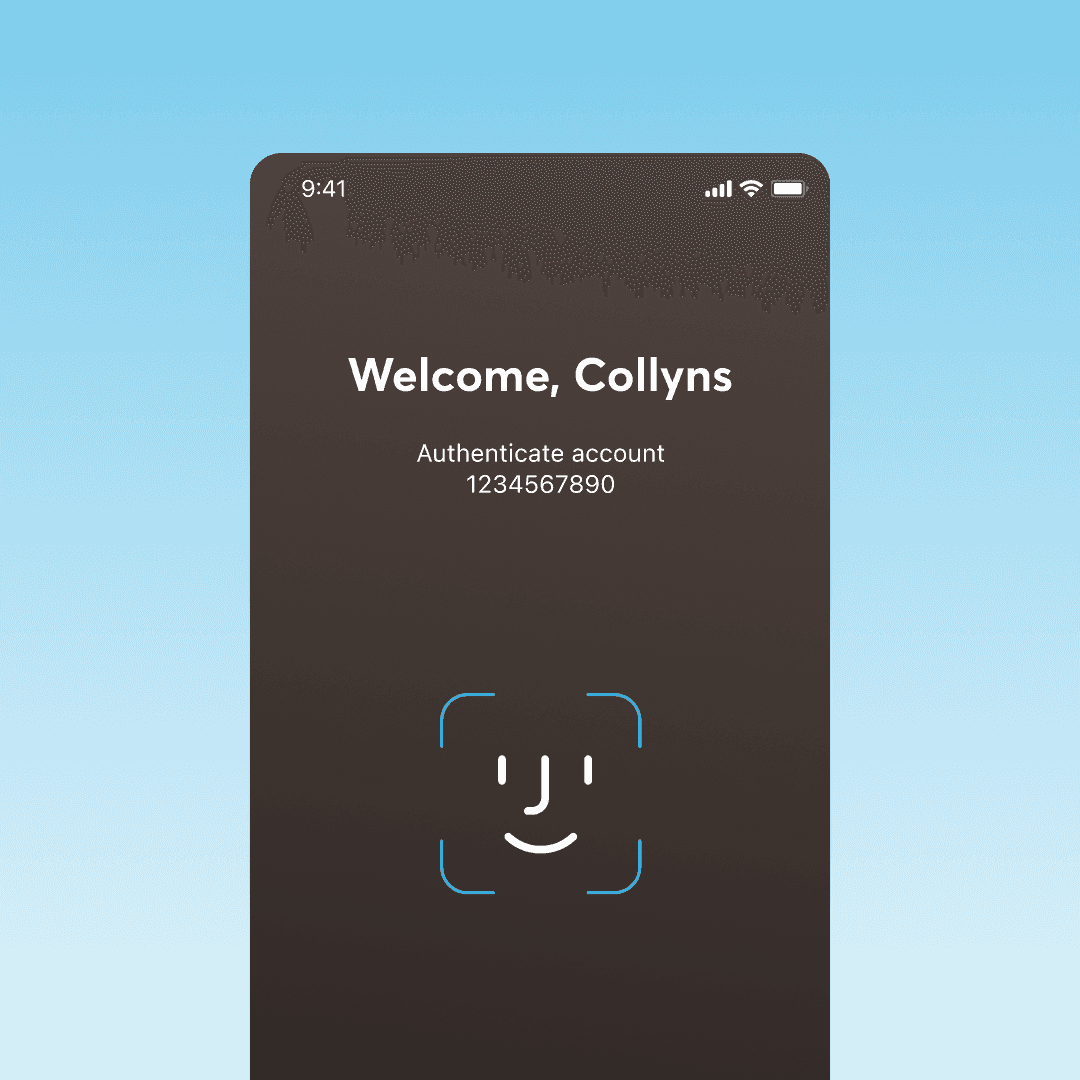
NCBA mobile app lock screen showing a personalised welcome message and a face ID authentication prompt on a dark background.
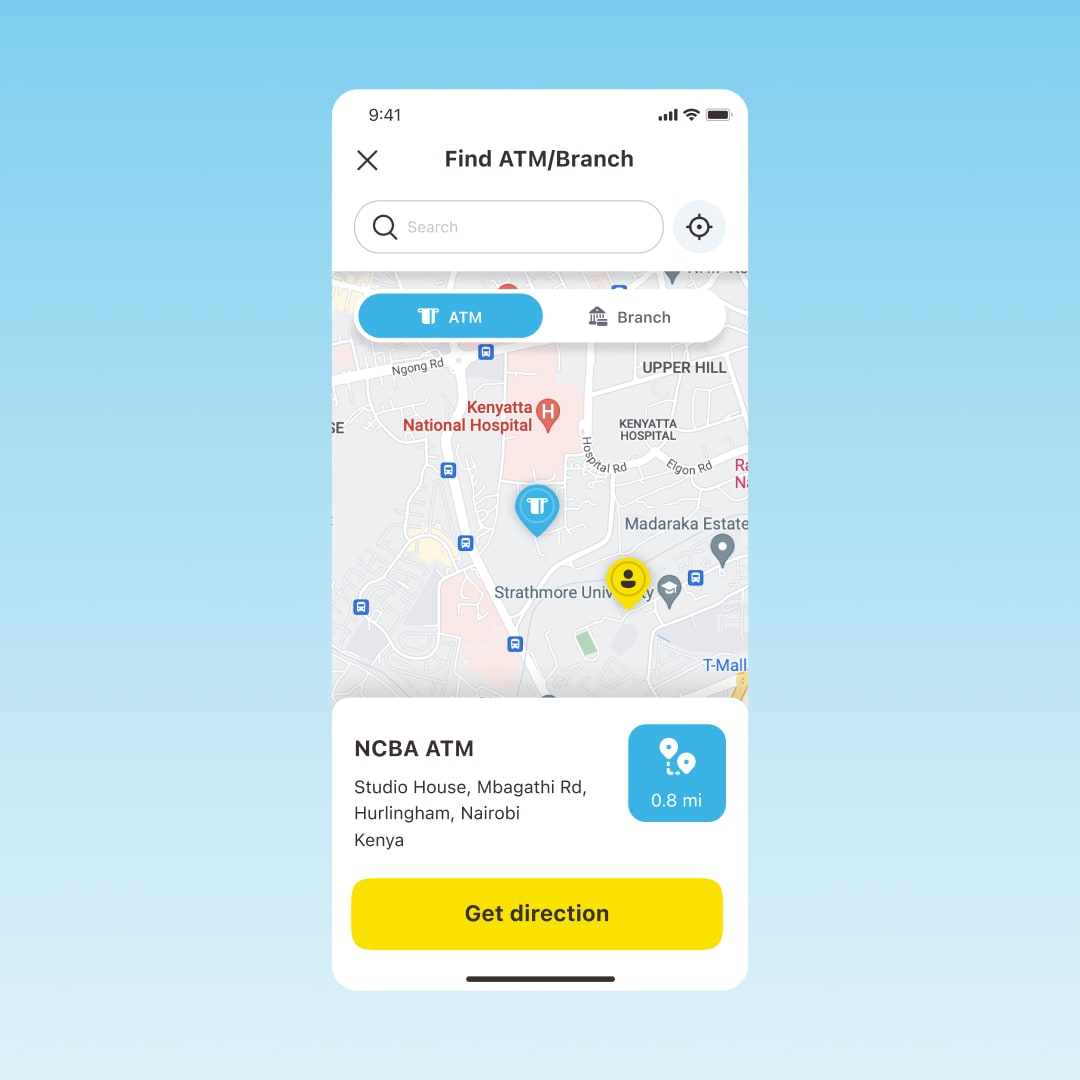
ATM and branch finder screen showing a map of Nairobi with a nearby NCBA ATM selected and a "Get direction" call-to-action button.

What we did

01.

Partnership with our design lead

One of our senior partners worked with with NCBA's teams in Nairobi whilst 12 designers handled production remotely. This meant faster decisions and better understanding of local needs.

Partnership with our design lead

One of our senior partners worked with with NCBA's teams in Nairobi whilst 12 designers handled production remotely. This meant faster decisions and better understanding of local needs.

02.

Unified payment process chaos

Designed single interface for 20+ payment methods—from M-Pesa to bank transfers to international cards. Each had different rules. We made them work as one.

Unified payment process chaos

Designed single interface for 20+ payment methods—from M-Pesa to bank transfers to international cards. Each had different rules. We made them work as one.

03.

Designed three connected platforms

Consumer banking app. Merchant payment system. Admin control panel. Previously separate systems now talked to each other.

Designed three connected platforms

Consumer banking app. Merchant payment system. Admin control panel. Previously separate systems now talked to each other.

04.

Integrated with core banking

Connected new designs to Pamoja, NCBA's existing banking infrastructure. No rip-and-replace, rather everything was built on what existed.

Integrated with core banking

Connected new designs to Pamoja, NCBA's existing banking infrastructure. No rip-and-replace, rather everything was built on what existed.

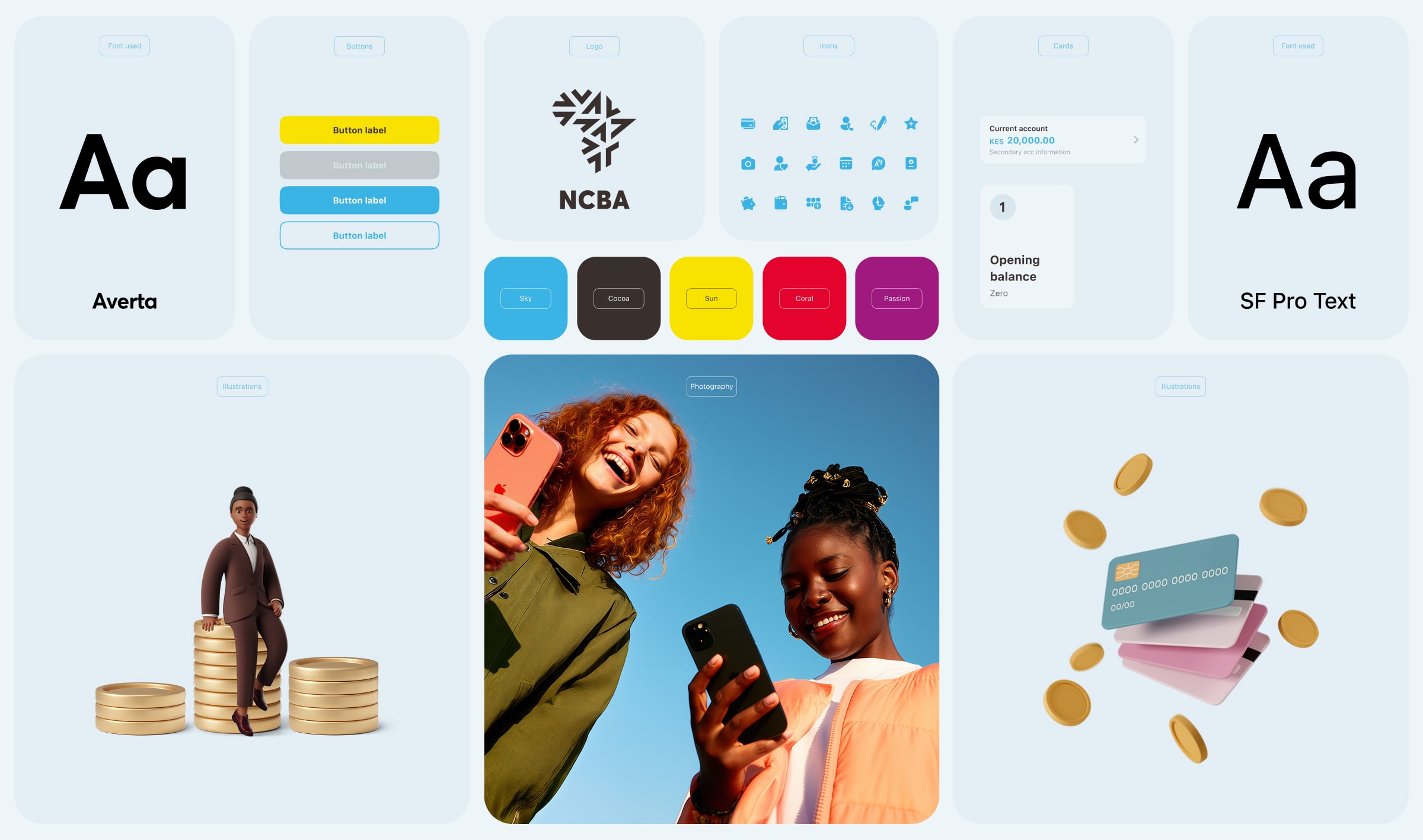
NCBA design system overview showing typography (Averta and SF Pro Text), button styles, brand colour palette (Sky, Cocoa, Sun, Coral, Passion), logo, icons, card components, photography, and 3D illustrations.
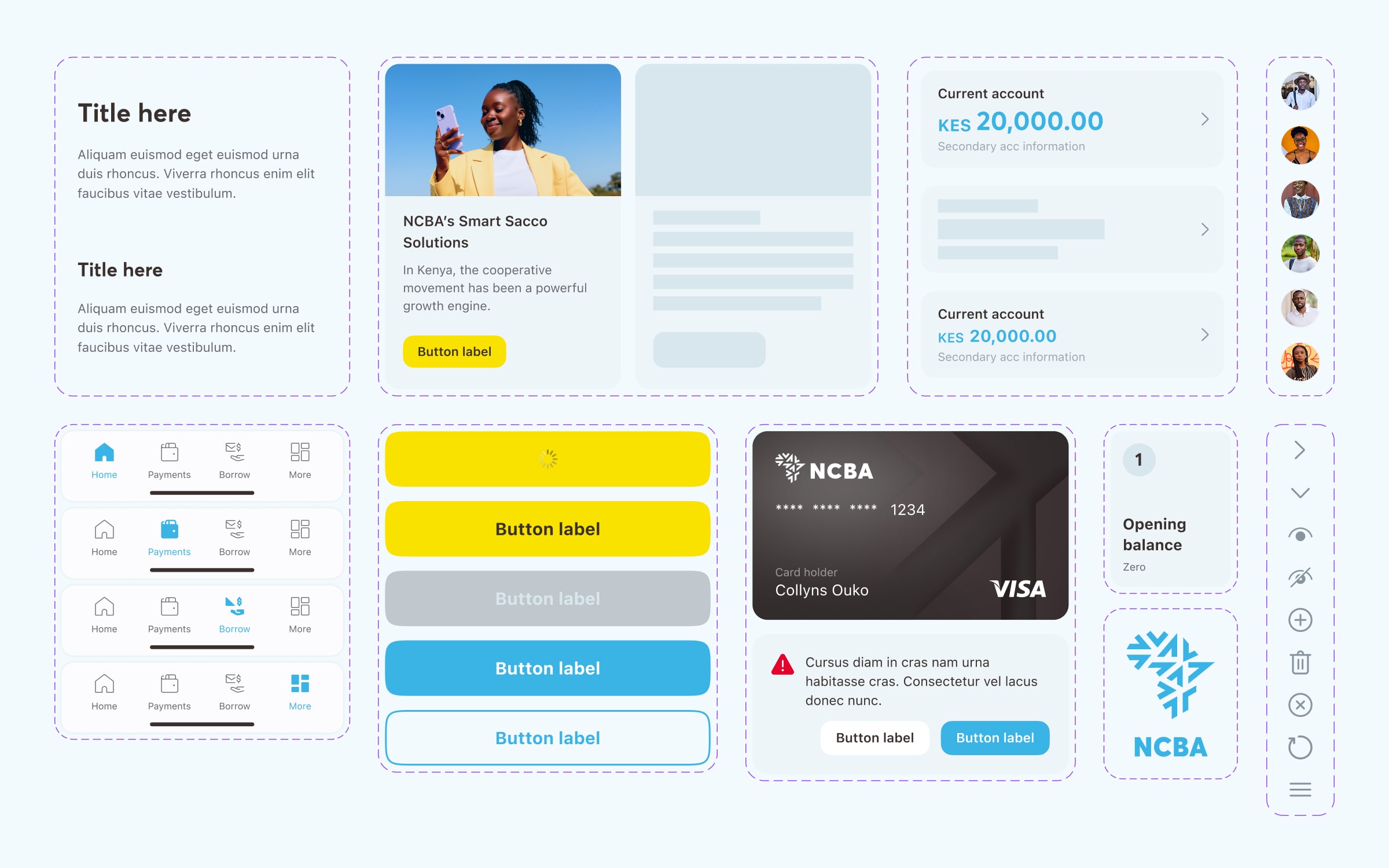
Component library spread showing content cards, navigation bar states, button variants, a Visa card component, account balance modules, and icon controls.
A ceramic piggy bank photographed against a split background of light blue and NCBA sky blue, used as a visual metaphor for savings.
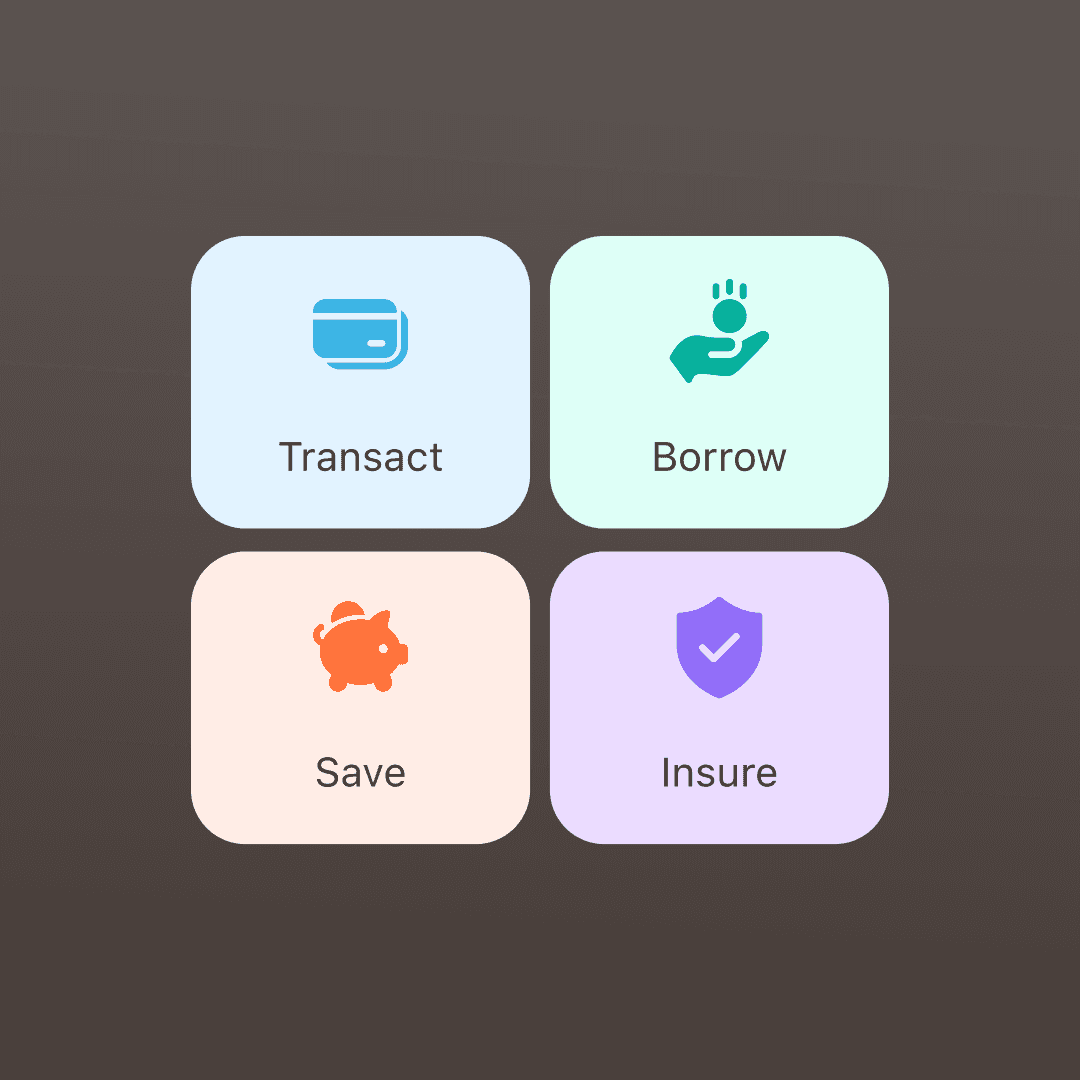
Four product category tiles on a dark background representing the app's core services: Transact, Borrow, Save, and Insure, each with a distinct pastel colour and icon.
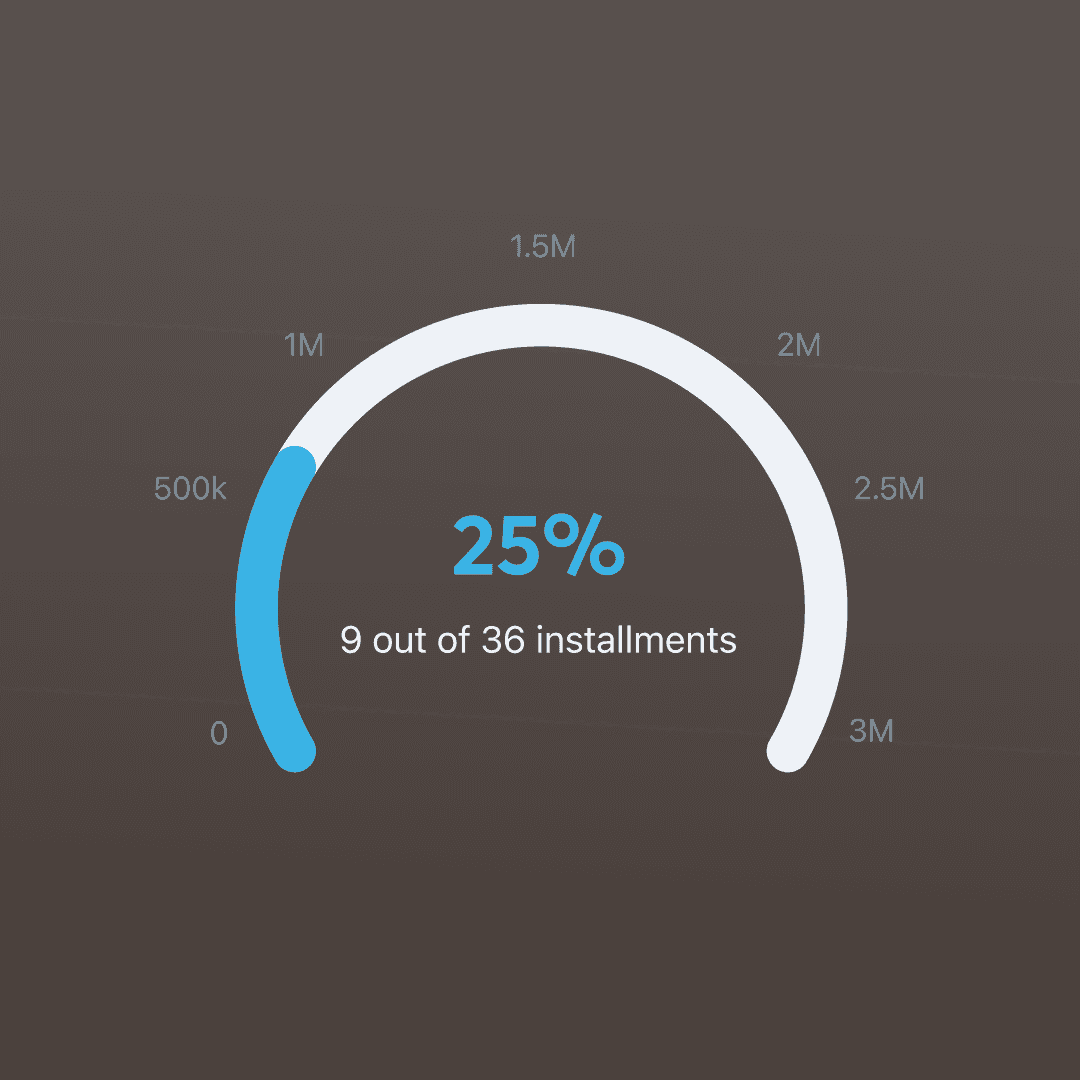
Semicircular loan repayment progress indicator showing 25% completion, representing 9 out of 36 instalments paid, displayed on a dark background.
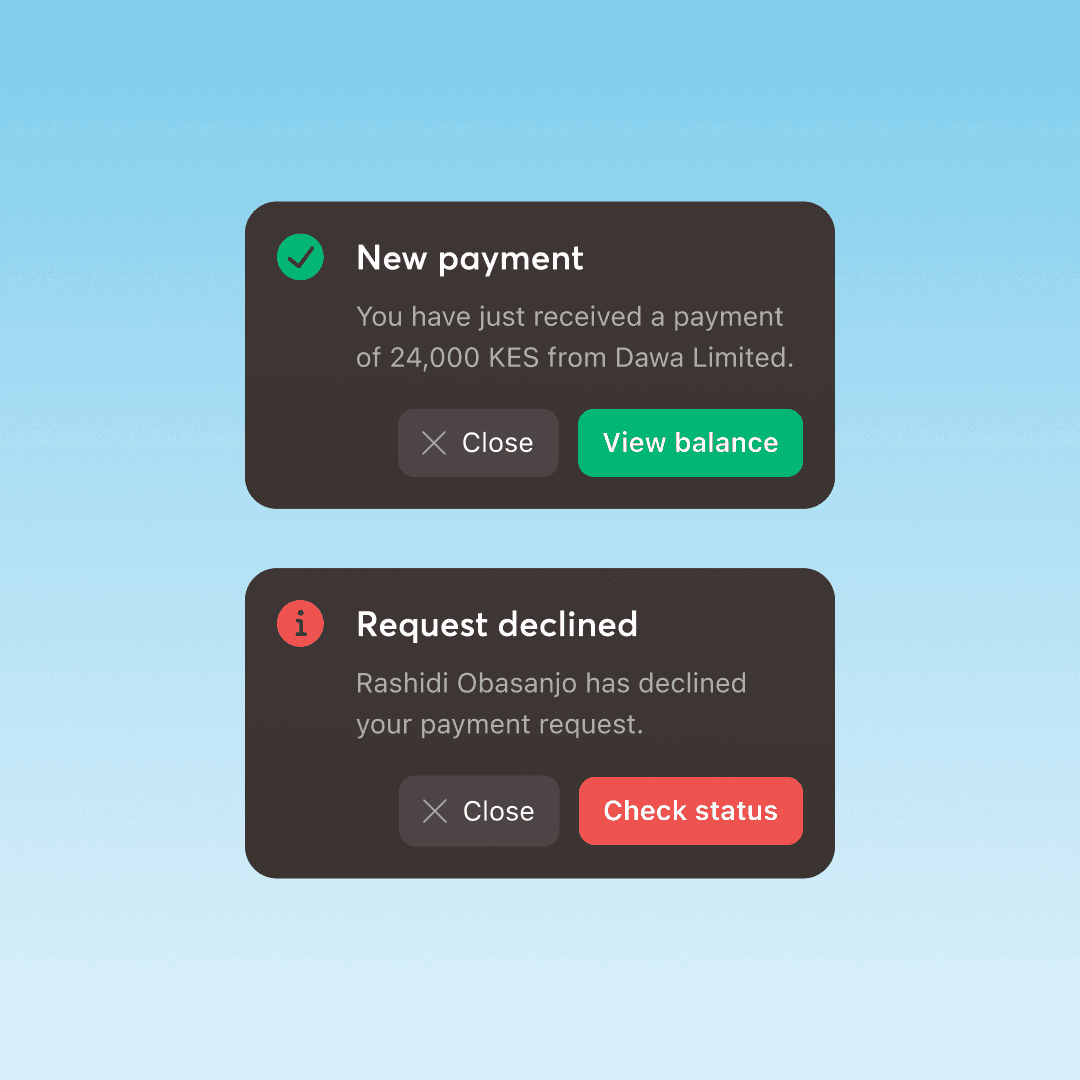
Two in-app notification components on a teal background: a payment received alert with a "View balance" action, and a declined payment request with a "Check status" action.

Project impact

User experience transformation

From siloed requirements to complete digital ecosystem with simplified financial journeys.

User experience transformation

From siloed requirements to complete digital ecosystem with simplified financial journeys.

Unified payment process

Single coherent interface simplifying Kenya's complex payment landscape.

Unified payment process

Single coherent interface simplifying Kenya's complex payment landscape.

Accelerated delivery timeline

Complete platform delivered in 4 months, 35% more efficient than industry standard.

Accelerated delivery timeline

Complete platform delivered in 4 months, 35% more efficient than industry standard.

Need to unify fragmented or complex user experiences?

We help ambitious, scaling companies break free from legacy constraints through embedded expertise, sprint-based accelerators and evidence-based design.

Our approach combines strategic presence with scaled execution—proving that the right expertise, properly positioned, delivers what armies of consultants cannot.